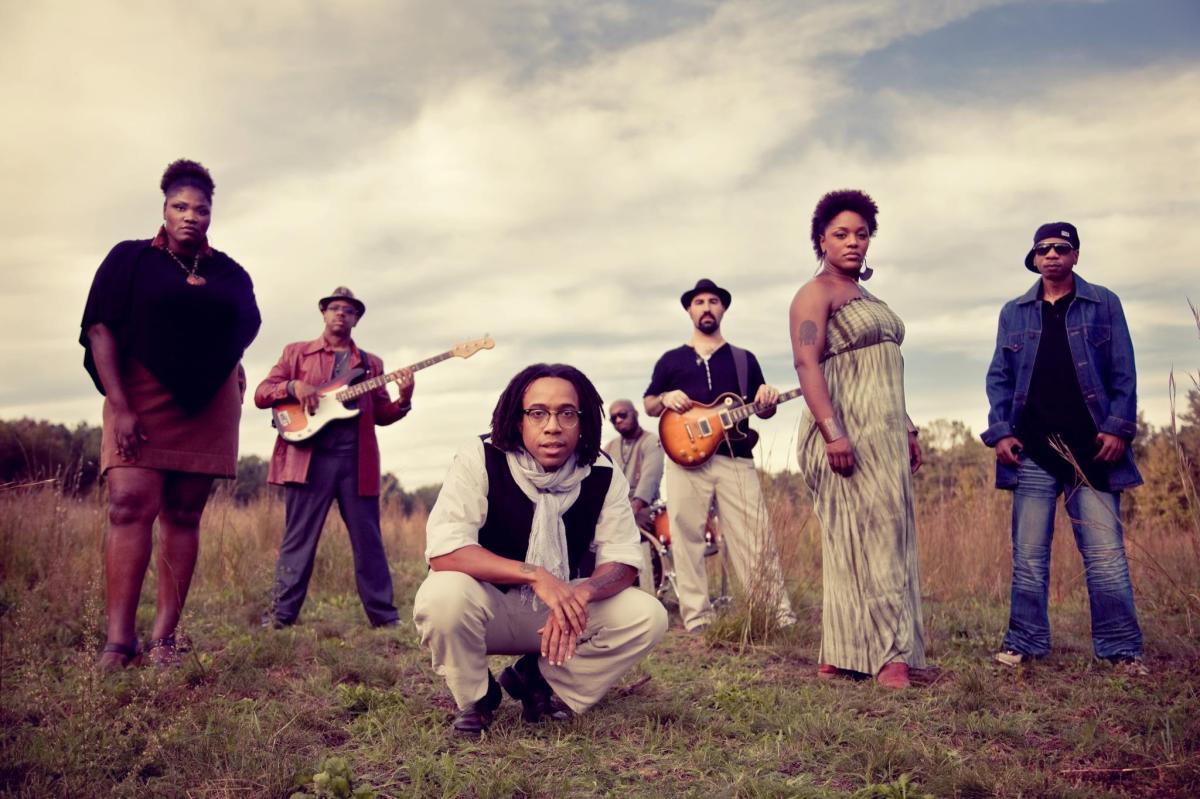
“It feels like a homecoming to some extent,” Speech says of Arrested Development’s return to South Africa after 14 years.
“At that time there was a change going on — Nelson Mandela had become president — and now there’s another change, with you guys having a new president.”
Sounding supremely relaxed, with his dog barking excitedly in the background, it’s clear a lot has changed for the rapper and his group too.
“Without a doubt,” he confirms.
“The group stopped doing music for about five years or more… and we’ve been inching our way back into the music scene slowly but surely.
“A lot of us have fallen in love and met the women of our dreams, the girls have met the men of their dreams, I have two children now. So there’s been a lot of changes in life.
“And musically we’ve gotten a lot more seasoned in the band and I’m very excited about our music right now and where we’re going. Some great times.”
His enthusiasm is genuine — and it’s pretty obvious he’s a ‘glass half full’ kind of guy, excited rather than frustrated by the challenge of working in a band with close on 10 members.
“Because we were away for so long, everybody found their own niche and because of that there are eight people who have totally different passions musically that we try to meld together on our projects. To some extent that’s exciting, and to the other extent it’s confusing and scary.
“It’s a challenge,” he continues, “but it’s also a huge joy because you never know what to expect with the Arrested Development nation. That has become the cool part about it all. I’m excited. I feel like our new music in the upcoming years is going to outshine any of the hits we’ve made so far.”
Those early ’90s hits — ‘Mr Wendal’, ‘Tennessee’ and ‘Everyday People’ — have, in terms of popularity, easily overshadowed the rest of the group’s work. But, as is to be expected, they’re not an albatross around Speech’s neck.
“I love the songs,” he gushes. “I wrote most of those hits and I love them. They’re very personal to me — they will always mark a new beginning in my life at that time,” he reasons.
“Performing the old material feels great to us. It’s part of our DNA, it’s part of who we are, so we don’t have any hate relationship with the old material.”
But with his enthusiasm for the group’s new material equally obvious (“I think it’s better, it’s more exciting,” he reiterates), what is it that keeps him writing?
“To me it’s a God-given talent that I’ve had since I was a young boy. And it’s hard to sleep when you have inspiration. It’s hard to do anything different than allowing that sort of burning desire to get out of you — that’s what writing is like for me. It’s something that I have to do,” he emphasises every word.
“And also there are so many issues — this world that we’re living in right now is so unique in some ways and yet so similar to civilisations and times of the past. It’s a great time to be alive — we have a lot of first-time things going on.
“Like Barack Obama in America being the first black person in the history of this country to run for office. I believe he’ll make it and he’ll likely be the first black president of the United States, one of the most powerful countries in the world.
“That’s amazing,” Speech says, genuinely pumped up.
“So when I’m writing songs, I just want to write about these times we’re living in.”
Not that his message is the same as everybody else’s.
“Arrested Development is in some ways a reactionary band — we try to fill in the voids. In the late ’80s, early ’90s, gangster rap was so prevalent and a very accepted part of hip-hop music. But there was no other side to that. You were either dancing, like MC Hammer, or you were extremely angry and in your anger just destroying your neighbourhood by shooting rival gang members or selling drugs in your community.
“There was just this anarchy-type energy and there was no alternative to it. So we felt a very big need to fill in the blanks.
“And Arrested Development is still motivated by the things people aren’t talking about right now.”
Unsurprisingly the songs, like their writer, are overwhelmingly optimistic — ‘Tennessee’ must be the most uplifting song about the death of one’s brother and grandmother.
“I tend to write about very real things — sometimes depressing — but very real and raw,” he reveals.
“However I don’t like the way it feels if I just stay at the point of depression or at the point of the bad news that I’m sharing. I think it’s just my natural inclination to think: ‘What is the hope?’, ‘What is the way out of this?’
“Even if there’s not a literal solution, my writing tends to lean more to the solution.”
Just like the man himself.
- This article originally appeared on iafrica.com
 Nils van der Linden